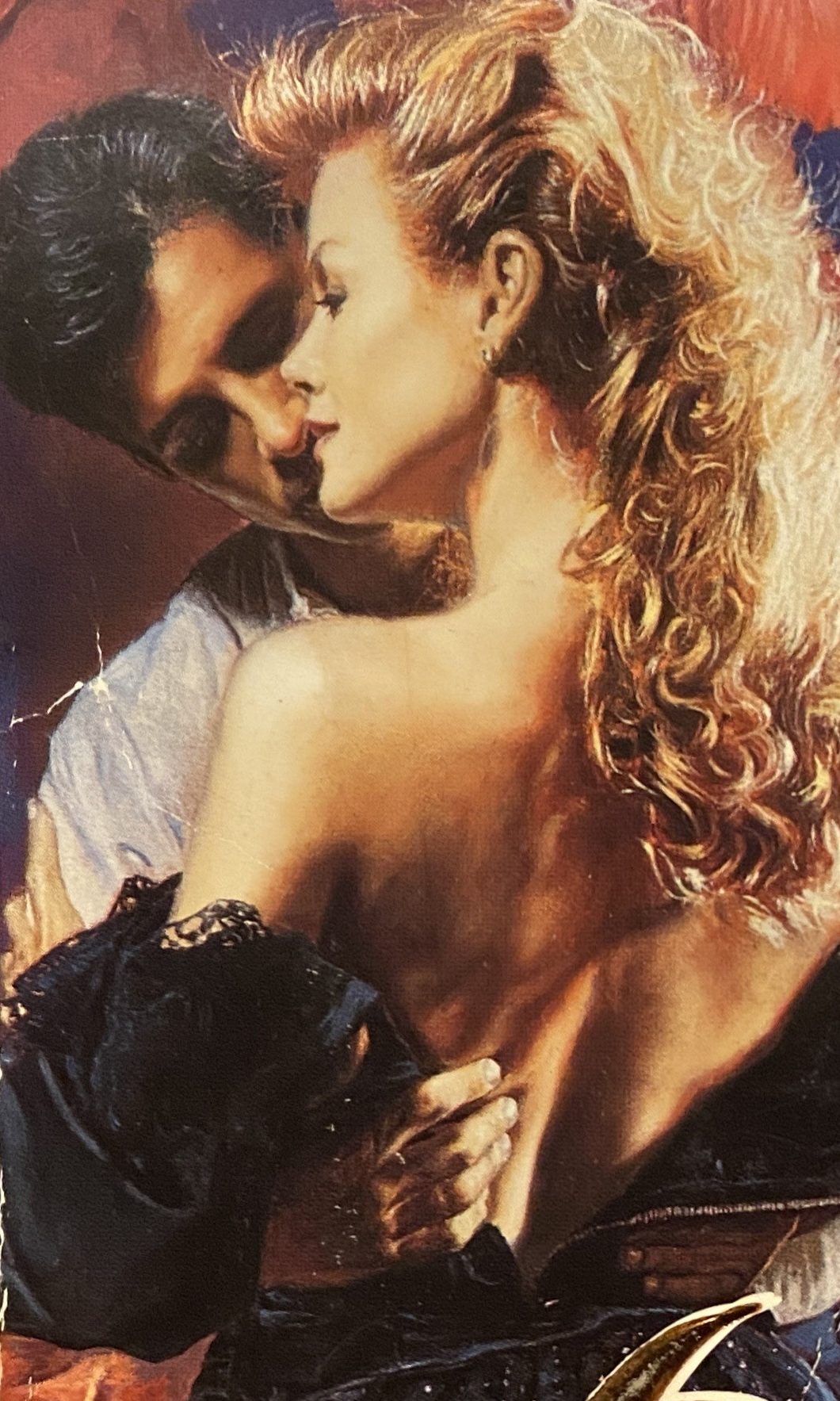
books:
- published in 2024: One Beating Heart by Elizabeth Kingston
- finishing a favorite series: Red Blossom in Snow by Jeannie Lin
- rewired my brain: Madensky Square by Eva Ibbotson
- it stressed me out: The Painted Lady by Lucia Grahame
podcast episodes:
- More Questions Than Answers from Black Romance Has a History podcast
I recommend listening to every episode of this first season (some really great interviews with Beverly Jenkins, Piper Huguley, and Margie Walker) but I think this season 1 finale offers some necessary and, at times, uncomfortable realities readers and writers of romance should sit with. - Janet Dailey: Part One and Janet Dailey: Part Two from Reformed Rakes podcast
it was interesting watching Romancelandia’s reaction to the announcement of this miniseries: so many people thought the Rakes would hang Dailey and her misdeeds (real and perceived) out to dry for the community’s listening pleasure. There was a palpable expectation that folks would have their bottomless appetites for public humiliation indulged. A real “DIG HER UP!” vibe. Instead, listeners were given a masterclass in extending empathy to their fellow, imperfect, humans. I was in tears by the end of part two (Richard Curtis was a real one!!!) Magnificent! - Newtropathic Medicine – Fever Rising by Maggie Ferguson [ICE WINE 2.3] from Whoa!mance podcast
This episode is a great tie-in with the Black Romance Has a History podcast episodes 1 and 2. I ended up reading Maggie Ferguson’s backlist after these podcasts mentioned her and came away with a renewed appreciation for category romance.
writings and video essays:
Is this 1984 romance scholarship the root of all the arguments I hate? from Beth Heymond at Ministrations:
I want to move conversation about the romance genre into a more neutral place. It is a genre just like horror, mystery, sci-fi, and fantasy. Viewing romance this way allows for it to be more. Be daring and controversial. To have characters do terrible things without the weight that somehow this is teaching the reader that they should accept maltreatment. I’m talking like romances isn’t like this already. There are so many romance novels that have characters doing terrible things to each other, and that’s great; however, the lens in reviewing these novels needs to change. The conflicts in romance shouldn’t be seen as inherently anti-feminist or teaching the reader the wrong thing rather its a genre interested in all kinds of conflicts between characters.
Ducal Reckoning: aristocrats part IV from Emma at Restorative Romance (difficult to choose a favorite Restorative Romance post from 2024- Artificial Time in Historical Romance and he’s a rake, she has a HOBBY are also excellent reads that I feel are true companions to the duke project):
The books that use dukes (and though less frequently, other peers) this way, when taken as a pattern and a trend, suggest the most useful mechanism for change is one good man in a position of power whose name history will remember, instead of solidarity and work amongst throngs of anonymous people. People who fell in love! both in the historical past and at a higher ratio in earlier generations of historical romance.
Spicy Books: You Know What I Mean? from Andrea at ShelfLove:
For readers of romance, “spicy book” flattens our ability to have meaningful conversations about an aspect of romance novels that are helpful for finding the books we individually want to read. It impairs our ability to communicate information clearly — and that’s weird, because the romance community loves creating and debating the meaning of in-community lingo.
Work from Mel at pagemelt:
creating a personal brand is an exercise designed to sand the texture off your soul. I think most creators on CorporateTok are trying to be helpful if only to further their own personal goals but the barrier between actually helpful tips for people who need jobs and what I can only describe as brainwashing is highly permeable because for a thinking, feeling person to survive in a corporate work environment… you literally have to brainwash yourself that is what leaning in is you have to rewire your neural pathways to convince yourself that your career is the sum of your personal ambitions
love, disability, mortality and immortality in contemporary romance from Sanjana at baskinsuns:
You do not have to be immortal to be loved and you do not have to be “well” to be loved. The future will have disabled people in it and the future will have disabled people who are deeply, deeply loved. And even if that displaces the comfort and stasis of the HEA (happily ever after) isn’t that worth representing in romance? Isn’t that worth exploring in romance?
 scarr
scarr 